
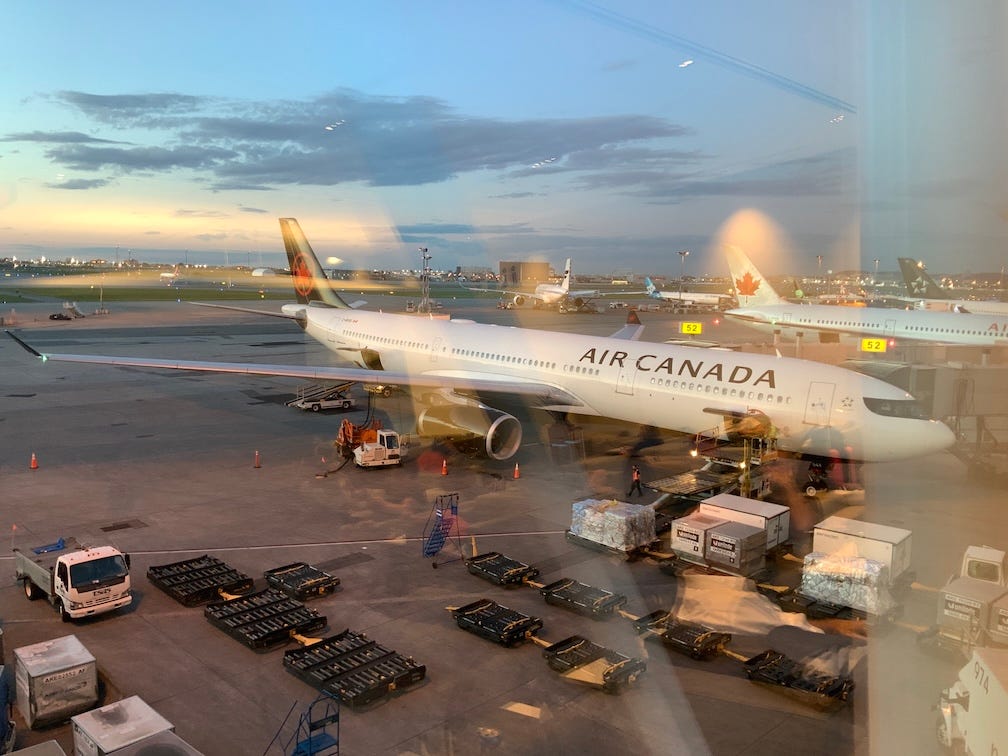
Mastering relations with the media is a key skill for airline CEOs and Anko van der Werff is no exception. Industry commentary about his upcoming move from SAS to Air Canada is as gushing as you would expect.
Things were not always so. Reading the 20 year old FlyerTalk thread “Anko van der Werff needs to get a new job” is an entertaining reminder that today’s respected airline CEOs were once junior managers learning their trade.
With his move to Air Canada, Mr van der Werff is unlikely to make such gaffes again. Running an airline can often follow a standard playbook. The airline is long established, already highly optimised and has its fair share of legacy issues.
After taking safety and operational reliability as his first priorities, Mr van der Werff will likely have a go at shuffling organisational design and ownership structures. He will probably whip out his spreadsheet and try to find a few more cost savings.
On the revenue side, he may build on his experience integrating SAS with Air France-KLM and Skyteam to develop Air Canada’s relationship with Greater Lufty and United. If he can integrate Aeroplan Loyalty with Revenue Management I would be impressed.
But there is one interesting and unique opportunity for Air Canada where Mr van der Werff has a genuine opportunity to do something new. This is in the Province of Alberta.
Advertisement:

This article was written using data from OAG Schedules Analyser: visit oag.com. Thanks OAG!
Alberta is enjoying an economic boom. Just over five million people live there according to the latest estimates from statcan.gc.ca. But nominal GDP per capita is close to USD 100,000, so the average Albertan is likely doing well enough to buy plane tickets and, if they so desire, fly longhaul.
Air Canada’s rival WestJet is well established in the province. Their Boeing 787 fleet operates from Calgary to a wide range of international destinations in both eastern and western hemispheres, including Rome, London, Seoul and Sydney. Together with Lufthansa Technik, WestJet has invested USD 120 million in a maintenance facility at Calgary.
The Alberta opportunity for Air Canada in Alberta is not one of competing more with WestJet to steal market share, as that would just lead to value destruction through a price war. Besides, Air Canada already do compete to a limited extent. A Calgary to London service operates. Connections are good in both directions to international flights via Vancouver, Toronto and Montreal.
The three maps below show Air Canada’s longhaul network, with the Calgary, Alberta service to London highlighted in blue.
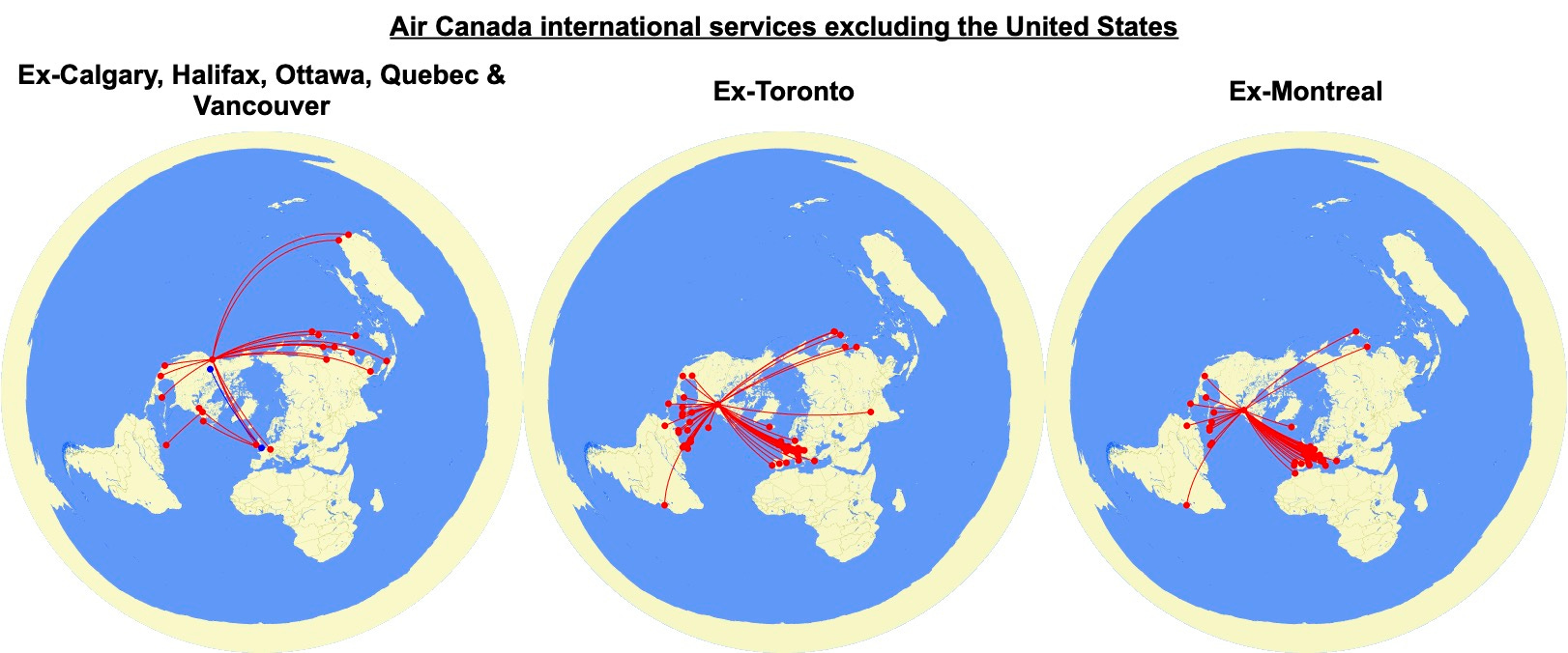
Mape generated by the Great Circle Mapper: visit gcmap.com
Used with permission | Links to maps: map 1, map 2, map 3
But for Alberta’s “other” two Air Canada airports Fort McMurray and Grand Prairie the picture is different. These small cities each have only 60-70,000 residents and are served by 48 Air Canada flights a week between them. They both also have an oil and gas industry, traditionally a consumer of air travel.
Fort McMurray has a three times a week service to Toronto and everything else is to Calgary. At Grand Prairie, all services are to Calgary. It would be interesting to see Mr van der Werff launch a few more flights a week from Alberta’s tier two cities into Vancouver and Toronto.
But traditional airline economics alone are not why Air Canada might be most interested in supporting Alberta. The province also has a separatist movement, with some citizens keen on seceding from Canada to become independent or join the United States.
