How does orchestration make the Aerotropolis work?
Airport efforts in journey orchestration can link passengers, suppliers and airlines

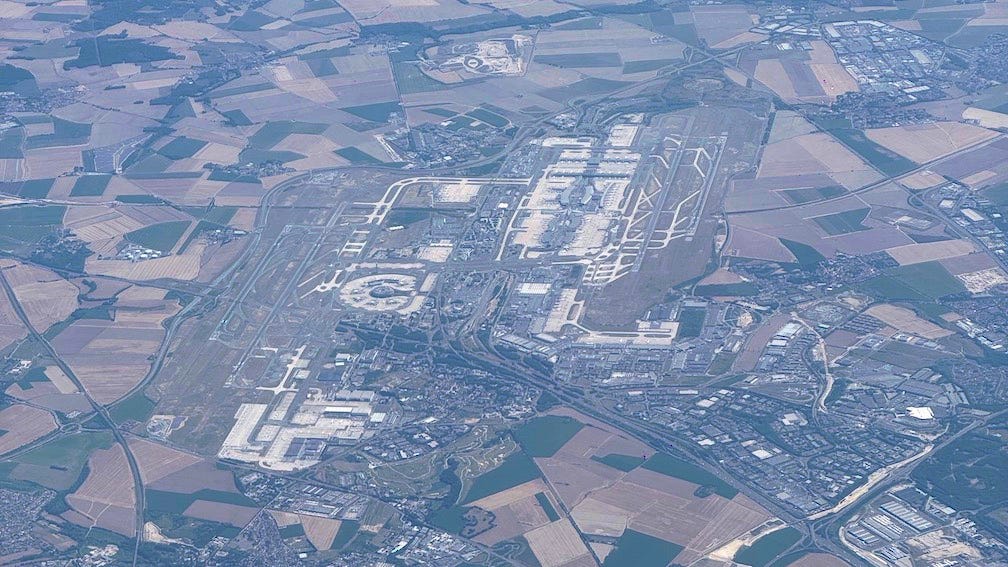
The cool word Aerotropolis describes an airport that is no longer a structure but a community. Airports where transit, commerce, services, daily life, mobility and services co-exist. It is a good word for crossword enthusiasts.
The Jewel Waterfall at Singapore’s Changi airport is a good example. The world’s largest indoor waterfall is surrounded by shops and services. Critically, it is located landside so you do not need to buy a plane ticket to take a look.
Even better, Changi’s tax exemptions apply anywhere on airport land, including around the Jewel, potentially delivering advantages for merchants and shoppers alike.
Advertisement:

Unfortunately for airports all of these services – landside and airside – tend to work in isolation. Shared intelligence is either limited or does not exist.
A check in agent or lounge guardian does not know that a passenger on their airline has just parked their car or tapped out of the metro at the terminal’s station. A shop does not know that one of their regular customers at the town branch is coming to the airport today.
But as far as passengers are concerned a trip to the airport needs to be part of one consistent, orchestrated journey.
This article is about how airports have a role to play in journey orchestration.
In some respects airports and airlines have similar opportunities – there is no reason why airports cannot offer services, accept orders and make delivery to passengers just like airlines. These are addressed in the first section.
But there are also journey orchestration elements that are more specific to airports. The second section explains how airports create three marketplaces – for aviation, for passengers and for suppliers – and the third section considers how airports can orchestrate journeys for all the players.
Modern Airline Retailing principles can be applied by airports
Modern Airline Retailing is an idea that airlines can offer a wide range of products and services in addition to air travel.
These might be traditionally tied to air travel, like lounge access, priority security or excess baggage. They might also have been historically sold alongside flights as part of a travel package, such as hotels, rental cars and insurance.
But they might also include things outside of the traditional travel retailing scope but still useful to travellers, such as restaurant meals, meeting rooms and value added services alongside the journey itself, like flowers in a hotel room.
In principle airports are an important part of any Modern Airline Retailing schema.
Sometimes passengers will require delivery of what they purchased through an airline in the airport itself. That might be lounge access or excess baggage, or delivery at the gate of products purchased remotely while in-flight.
But airports could also make similar retailing efforts themselves. Arguably they are in a strong position to do so as they control site access and floor space use, which will both be essential elements of delivering what customers paid for.
In terms of orchestration though, it remains to be seen how effective airports can be at linking services across a journey. Travellers tend to interact with airline systems and apps to check in and head through the airport. The airport’s own app is not as essential.
Airlines and airports may not share data. Your local airport may not know that you are coming today, even if you travel through many times a year. That makes it hard for airports to make customised and compelling offers to travellers in advance.
But once travellers have arrived at an airport, or interacted with an airport’s apps, the game changes. The next two sections address how.
Journey orchestration needs to work across three marketplaces
Airport ecosystems create three marketplaces:
1. For airlines, their handlers and agents, without whom the airport would not exist
2. For infrastructure suppliers, who provide the hard and soft products that the airport needs to operate
3. For passengers departing, arriving or connecting, who need catering, space, comfort and entertainment.
An airport with strong orchestration processes in place is able to link and enhance all three of these marketplaces.
Consider how Uber, best known for ride hailing, links takeaways and rail tickets. Uber has linked these marketplaces. Or how China’s super-app Alipay links payment with travel and so much else. Airports can do the same.
Understanding what people need from airports
From an Economics perspective, each player in the three marketplaces wants to optimise their own wellbeing.
For retailers, service providers, airlines, the infrastructure suppliers and all other businesses, this means operating as profitably as possible.
Meanwhile for passengers it is about meeting their travel priorities. For some passengers it might be about saving money. For others, saving time, avoiding surprises or travelling comfortably might be important.
The challenge for airports is to make everything work as intended for all the players.
Airlines, handlers and agents require safe, secure and reliable operating environments.
The airport’s suppliers require procurement systems that offer a realistic chance of winning bids and a payment system that processes invoices on time.
Heathrow requires all their tier one suppliers to work with small and medium sized enterprises (SME) to give companies from all over the UK the chance to work with the airport.
For example Inventrite (a UK-based SME) supplies rechargeable lamps that are used at Heathrow to perform operations at night time. The Pallets Yard, another SME, supply pallets that the airport’s tier one suppliers use to make deliveries to the site.
Creating the procurement environment where the airport gets what it needs from as wide a network as possible with the end result that passengers can fly safely and reliably is another form of orchestration across markets.
Suppliers offering technology that enables passenger processing and identity-led journey integration are particularly important for the journey orchestration process. But every supplier counts.
Everybody who works airside needs a reliable and efficient process of getting appropriate clearance. A boarding pass for passengers, a security pass for staff and contractors.
Tango Check, a vetting and screening organisation, reckons that 72% of airside pass applications have an anomaly of some kind. These arise because the process of applying for passes is tough.
Passengers need three things from the airport. First is a single integrated source or point of interaction. A high quality and informative app is a good bet. But many passengers will want to ask staff for advice.
A service like Heathrow’s staff app can be deployed providing information that any member of staff can answer any passenger’s reasonable question.
Next up is intelligent personalisation and seamless journey integration, powered by data. Airports are data generating machines and sit on top of vast reservoirs of numbers ready to be crunched.
Personalisation need not necessarily mean making the passenger experience as great or luxurious as possible, although it can help do that – think Abu Dhabi and Doha as well as Changi.
It can also be about delivering the desired standard of service at as low a cost as possible, so people get to their gates and onto their planes on time and airlines are attracted by low landing fees – consider Ryanair and the many airports it flies to in Poland.
Data can also be used to optimise customer dwell time in catering outlets and shops, generating healthy chunks of non-aeronautical revenue – think Amsterdam’s Schiphol.
